
What are Leatherjackets? Identifying and treating lawn damage
Leatherjackets are the larvae of the crane fly (daddy longlegs) and one of the most damaging lawn pests in the UK. They feed on grass roots from autumn through to spring, cutting plants off below the soil surface and causing irregular patches of yellowing, dying turf. Treatment is most effective from mid-September to October, when larvae are recently hatched, small, and close to the surface.

Author
Leanne Lewis

Reviewed By
Steven Taylor
Updated: 10/5/2026
Published: 7/18/2024

Leatherjackets are the larvae of the crane fly (daddy longlegs) and one of the most damaging lawn pests in the UK. They feed on grass roots from autumn through to spring, cutting plants off below the soil surface and causing irregular patches of yellowing, dying turf. Treatment is most effective from mid-September to October, when larvae are recently hatched, small, and close to the surface.
What do Leatherjackets look like?
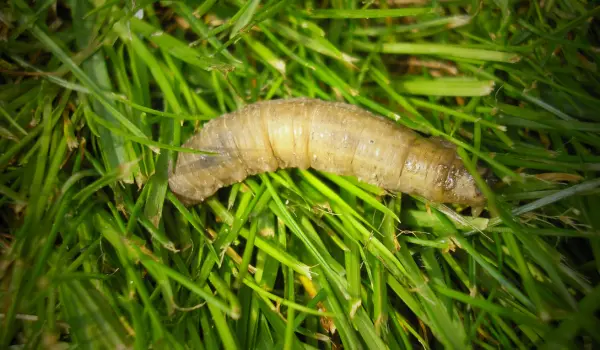
Leatherjackets are grey-brown, legless grubs with a tough, rubbery skin and no visible head. They typically grow to 2.5–3 cm when fully developed. Their tough skin is how they got the name "leatherjackets".
What do Leatherjackets turn into?
Leatherjackets turn into crane flies, also known as daddy longlegs. The adults emerge in late summer, mate and lay their eggs in the lawn, starting the cycle again.
Leatherjackets vs. chafer grubs: how to tell the difference
Both are common lawn pests, but they are different insects with different treatment approaches.
Leatherjackets
- Colour: grey-brown
- Legs: none
- Body shape: straight and cylindrical
- Head: no visible head
- Size: 2.5–3 cm
- Peak damage: autumn to spring
Chafer grubs
- Colour: cream or off-white
- Legs: three pairs
- Body shape: C-shaped
- Head: visible brown head capsule
- Size: 1–2.5 cm, depending on species
- Peak damage: late summer to autumn
Signs of Leatherjackets in your lawn
Look for these signs:
- Irregular yellow-brown patches appearing from late summer onwards
- Grass that pulls away easily from the soil with no roots attached
- More birds on your lawn, such as crows, magpies, rooks and starlings, or foxes digging. They're hunting for grubs just below the surface.
- Damage that worsens in wet autumns following a dry summer
To confirm: cut a square of turf (approx 30 cm x 30 cm), peel it back and inspect the top 5 cm of soil. If leatherjackets are present, you'll find grey-brown legless grubs just beneath the surface. Alternatively, lay a sheet of black polythene over the affected area overnight. Grubs will surface and can be seen the following morning.
If you find cream-coloured grubs with legs and a C-shaped body, you're dealing with chafer grubs instead, and the treatment approach is different. (Link "chafer grubs" to your chafer grub blog.)
Why do some years have worse Leatherjacket infestations than others?
Leatherjacket populations are heavily influenced by autumn weather. Crane flies lay their eggs in late summer, and those eggs need moist soil to survive. A warm, wet September and October creates ideal hatching conditions, and significantly more larvae make it through to winter. Cold, dry autumns tend to result in lower populations. This is why some years see widespread lawn damage across the UK while others pass without issue
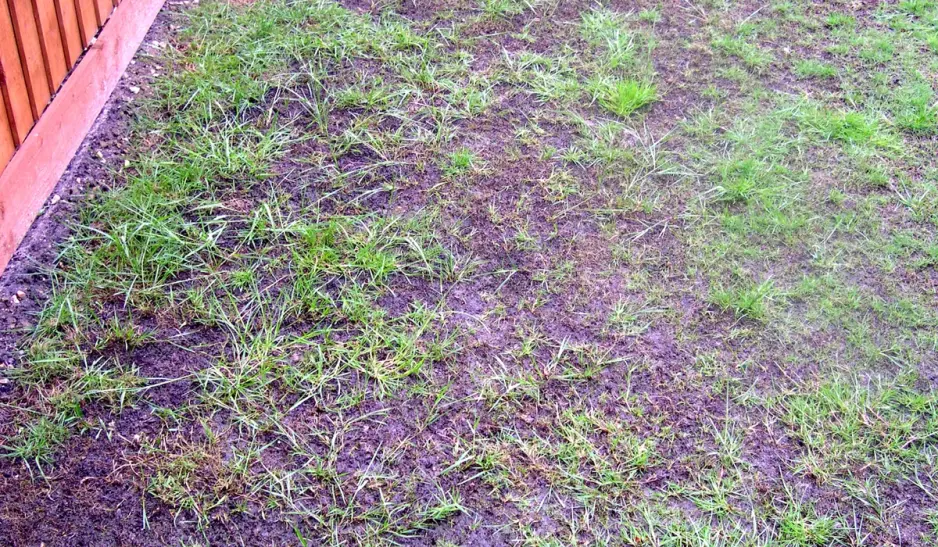
How to tell if Leatherjackets are a problem in your lawn:
- Lawns develop patches where the grass turns a yellowish brown and dies. This can be distinguished from similar effects, caused by lawn diseases or adverse growing conditions, by lifting the affected turf and finding Leatherjackets in the surface layers of the soil.
- Crows, magpies, rooks, and starlings will search for Leatherjackets in the turf. These birds will scratch the surface to bring the Leatherjackets up.
Why am I finding Leatherjackets on my patio?
Leatherjackets sometimes migrate to hard surfaces in search of moisture, particularly during dry spells or when disturbed by treatment. Finding them on patios or paths is normal and does not indicate a separate infestation - the source is the adjacent lawn.
When should you treat for Leatherjackets in your lawn?
The optimal time for Leatherjacket treatment is between mid-September to October, before their next season.
Leatherjackets usually have a one-year life cycle which starts when the female lays her eggs in the lawn around September, they hatch 2-3 weeks later.
During mild Winters, the pests will have grown, and the damage will be much more extensive by February/March.
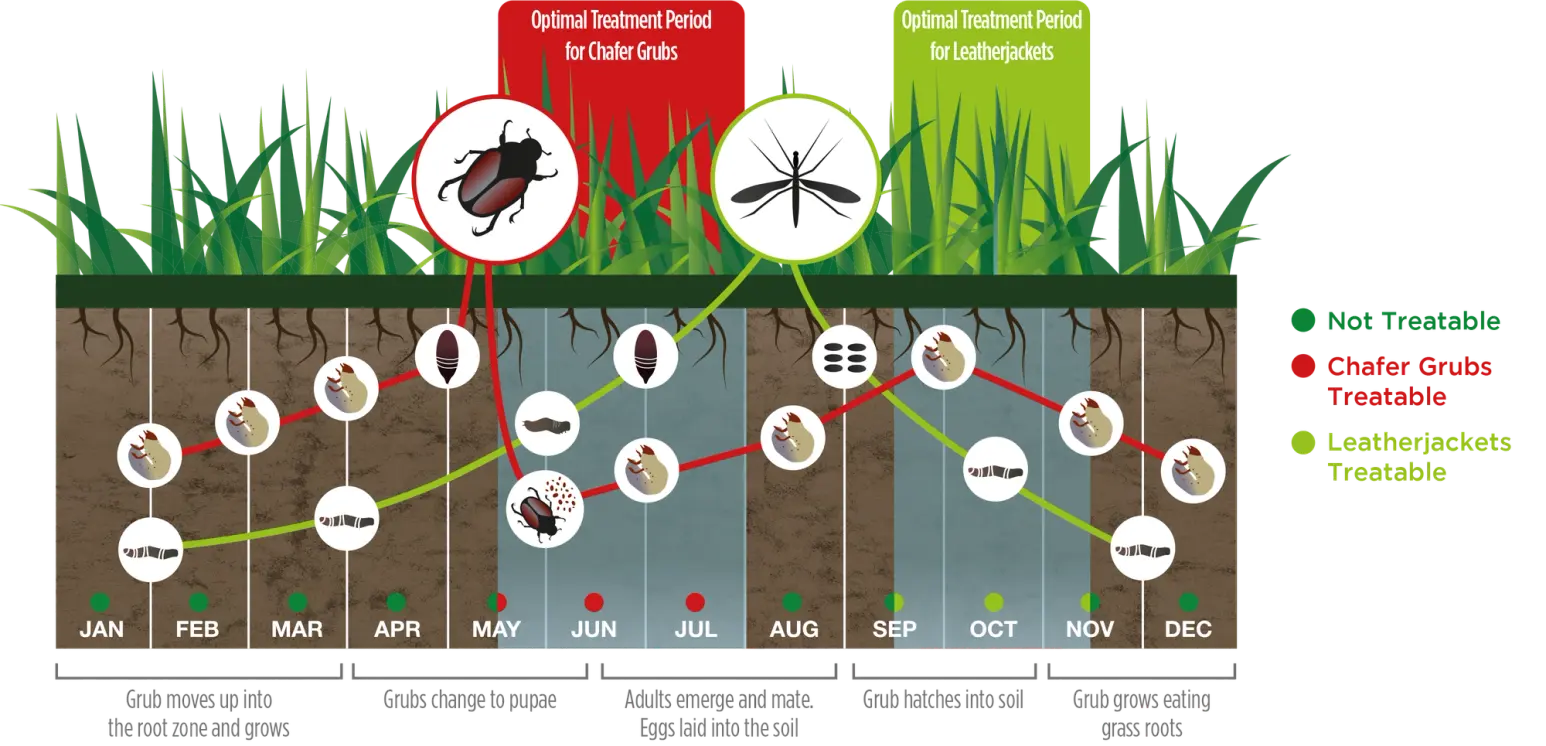
Life cycle of the leatherjacket: from crane fly egg to root-feeding larva to adult fly
Two main treatment approaches:
Biological control (available to homeowners): Nematodes (Steinernema feltiae or Steinernema carpocapsae) can be applied to moist soil when temperature is above 12°C. Water the lawn well before and after application. Available from garden centres. Effective when applied at the right time under the right conditions.
Professional insecticide treatment: Licensed professionals in the UK can apply Acelepryn, a targeted insecticide approved for turf use that provides highly consistent control of leatherjackets and chafer grubs. This option is not available to homeowners and requires a qualified applicator.
Will my lawn recover from Leatherjacket damage?
Yes - most lawns recover well once the infestation has been treated. Recovery steps:
- Treat the infestation first -- leatherjackets must be addressed before overseeding, otherwise new grass will be damaged
- Overseed in early autumn - bare and thinned areas respond well when soil is still warm
- Apply a lawn feed to support new grass establishment
- Minimise foot traffic while new grass roots in
- Aerate if necessary - compacted, damaged soil benefits from aeration before overseeding
Severe infestations causing extensive turf loss may require a full lawn restoration, including scarification, aeration, and professional-grade overseeding as part of GreenThumb's NutraShield programme.
FAQ's
How can GreenThumb help?
Our NutraShield Programme efficiently addresses Leatherjacket grubs (and Chafer Grubs as well), diminishing their population through effective eradication methods. This Pest Management Treatment is most effective when the grubs are small in late September/October.
You should start to see the effects quite quickly from this. Your lawn will look greener as a result; the effects will improve over a month as less damage is visible and your lawn has had time to recover; our regular core treatments will also help to speed this recovery up.
Pest Management
Green Thumb’s Lawn Pest Control service effectively protects your lawn from pests like grubs and ants. Expert treatments keep your turf healthy and pest-free, tailored to your lawn’s specific needs.
Read More
Chafer Grubs
Chafer grubs are the larvae of chafer beetles that feed on grassroots, causing patchy, weakened lawns. This blog explores how to identify, prevent, and treat chafer grub infestations to protect your lawn year-round.
Read More
Lawn Treatment Programmes
Regular treatments ensure your lawn gets the nutrients it needs, helps prevent common lawn issues, and promotes strong, resilient grass. By following a consistent treatment plan, you can enjoy a green lawn that thrives.
Read More