
How to get rid of moss in your lawn
How to Get Rid of Moss in Your Lawn: Causes, Treatments, and Long-Term Prevention
Moss takes hold in lawns where growing conditions favour it over grass: poor drainage, shade, compaction, thatch, low nutrition, or soil acidity. The fastest way to kill moss is with a ferrous sulphate-based treatment or scarification, but without fixing the underlying conditions, moss will return. Long-term control means improving lawn health until grass outcompetes moss naturally.

Author
Leanne Lewis

Reviewed By
Steven Taylor
Updated: 9/25/2026
Published: 9/26/2025

Why does moss grow in lawns?
Moss doesn't invade healthy, dense turf -- it fills gaps where grass is struggling. The most common causes in UK lawns:
Poor drainage or waterlogging
- What it creates: wet, compacted soil that moss thrives in
- Fix: aeration, top dressing and improved drainage
Heavy shade
- What it creates: reduced grass growth and increased moisture
- Fix: shade-tolerant seed and tree management
Soil compaction
- What it creates: grass roots can't penetrate, so moss spreads
- Fix: hollow tine aeration
Excessive thatch
- What it creates: a waterlogged, spongy layer at the surface
- Fix: scarification
Mowing too short
- What it creates: weakened grass, letting moss fill the gaps
- Fix: raise the cutting height
Low soil nutrition
- What it creates: thin, weak grass
- Fix: a regular feeding programme
Acidic soil (low pH)
- What it creates: weakened grass, with conditions that favour moss
- Fix: pH correction treatment
Drought damage
- What it creates: bare, dry patches
- Fix: overseeding and Oasis wetting agent
Identifying which factor applies to your lawn determines which treatment is most effective. Often it's a combination of two or three.
Common lawn mosses

Trailing moss (Hypnum cupressiforme): Flat, feathery, and wiry, spreading outward in a network pattern. Often found in shaded, moist areas.
Cushion-forming moss (Leucobryum glaucum): Forms distinctive pale grey-green cushions. Indicates very wet, acidic conditions and poor drainage.
Upright moss (Polytrichum spp.): Grows in darker green upright clumps. Often found in more open areas with compacted, acidic soil.
Knowing which type you have gives you a useful pointer to the underlying soil conditions causing the problem.
Why is a lawn moss a problem?
Moss is troublesome for those who want a thriving lawn. It not only impacts a lawn’s appearance but also affects health.
If untreated, moss will die off in summer (due to low moisture levels) but leave unsightly bald patches
Roots less able to receive essential water and nutrients
Uneven colour and surface – lawn is spongy underfoot
Grass has to compete with moss for growing space
Moss in lawns can cause soil erosion by providing surface cover and absorbing water
Moss creates a locally humid environment and in turn, a home for invertebrates such as slugs
Moss is also found on:
- Worn/overused areas: especially along walkways and where children play
- New-build lawns: sometimes due to poor site preparation
- Established lawns: usually due to poor health/stresses to the grass plant
- Tree roots: many people have trees in the garden - when larger roots grow close to the soil surface, the grass is prevented from having sufficient soil - this causes moss to develop and grow on top of the roots If the lawn is not watered sufficiently, the finer (sometimes microscopic) feeder roots of the tree can move upwards and compete with grass for water and space - weakening the grass plant and permitting moss to grow [This also can occur around shrubs bordering the lawn, especially evergreens].
What kills moss in a lawn?
Iron sulphate (ferrous sulphate) is the most effective and widely used moss killer in UK lawn care. It turns moss black within days, killing it quickly. Available as a liquid or granular product at garden centres.
Important: Iron sulphate kills the moss but does not remove it or fix the conditions that caused it. Dead moss (black, fibrous material) must be raked or scarified out after treatment, otherwise it becomes thatch that worsens the problem. And if the underlying cause isn't addressed, moss regrowth typically occurs within one to two seasons.
GreenThumb's approach uses professional-grade iron-containing treatments as part of a broader programme that includes scarification to remove dead moss and feeding to strengthen the grass after treatment.
Will moss come back after treatment?
Yes -- if the conditions that allowed moss to establish in the first place haven't changed. Iron sulphate kills existing moss but doesn't prevent regrowth. Scarification removes dead moss but doesn't improve compaction or drainage.
Sustained moss control requires:
- At least annual scarification and aeration
- A consistent feeding programme to keep grass dense
- Correction of the underlying factors (shade, drainage, pH, compaction)
Most UK lawns with recurring moss problems see significant and lasting improvement after 2–3 seasons of systematic treatment. The underlying conditions improve progressively, and grass gradually outcompetes moss without ongoing intervention.
GreenThumb to save the day.
To remain moss-free, a good lawn maintenance programme is essential, that’s where we come in! We can improve the vigour of the grass and address any other contributory factors.
NutraGreen Autumn/Winter: bespoke seasonal treatment
As well in lawns with damp/shady conditions, moss can appear in poorly maintained lawns. Moss seems to prefer poor quality soil and thrives among weak grass. Simply raking-out/removing moss will not prevent regrowth unless the conditions favourable to its growth are changed. Our treatment for autumn/winter improves lawn strength; being rich in iron, it makes lawns greener as well as better able to cope with adverse conditions.
Not only that, it also dehydrates moss – preventing it from reproducing. Once turned black by the treatment, moss can be removed from the lawn - the method of scarification helps reduce levels of thatch.
Protect Your Lawn Today – Prepare for a Healthier Tomorrow
Support your lawn with our expert treatment. Strengthen roots, control moss, and set the stage for greener, more resilient growth.
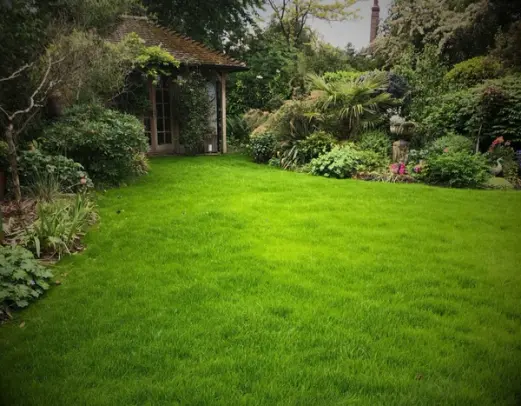
NutraGreen Autumn/Winter
Our NutraGreen Autumn/Winter Long treatment boosts your lawn with a micronutrient feed, improving winter resilience. Applied October to December, it also dries out moss,, while aiding recovery from aeration and scarification.
Read more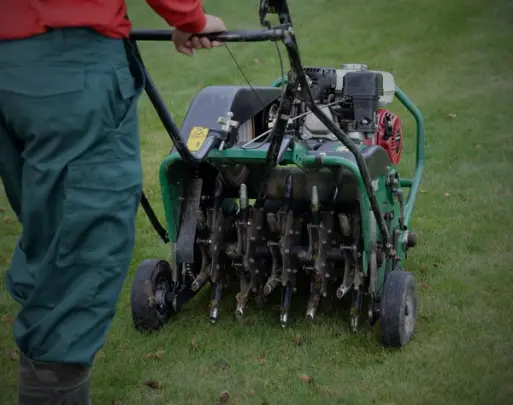
Lawn Aeration
Lawn Aeration improves soil structure by creating holes that allow better air, water, and nutrients to reach grass roots. It helps reduce compaction, promotes healthy growth, and keeps your lawn looking it's best throughout the seasons.
Read More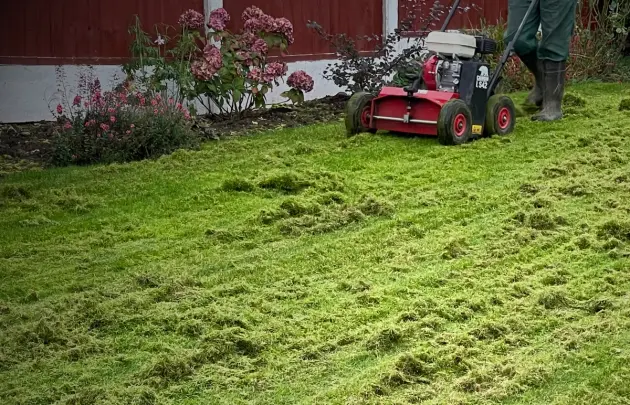
Lawn Scarification
Lawn Scarification is a mechanical process that reduces surface thatch, allowing essential elements like water, air, and fertilisers to reach the grass roots, promoting a healthier, more resilient lawn.
Read More