
What is Thatch?
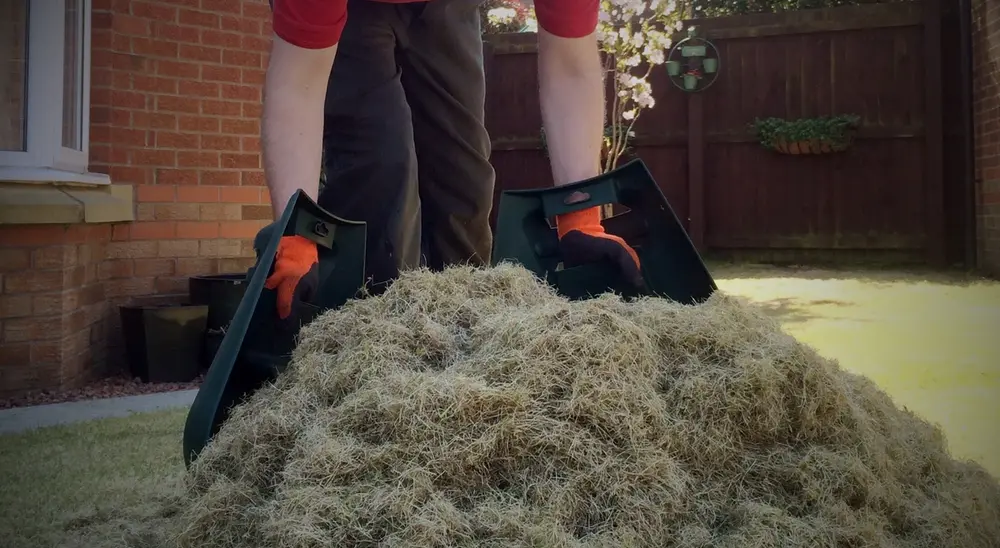
Thatch refers to the accumulation of dead grass, decomposed grass roots, leaves, and, in some cases, living grass roots that naturally form in a lawn. While a small amount of thatch in a lawn is normal and can be beneficial, it becomes problematic when it grows too thick and decays. Excessive thatch can block air, water, and nutrients from reaching the grass roots, leading to weak and unhealthy grass growth. Additionally, thatch is a primary cause of moss growth on lawns.
There are two types of thatch in a lawn: surface thatch and sub-surface thatch.
What is Surface Thatch ?
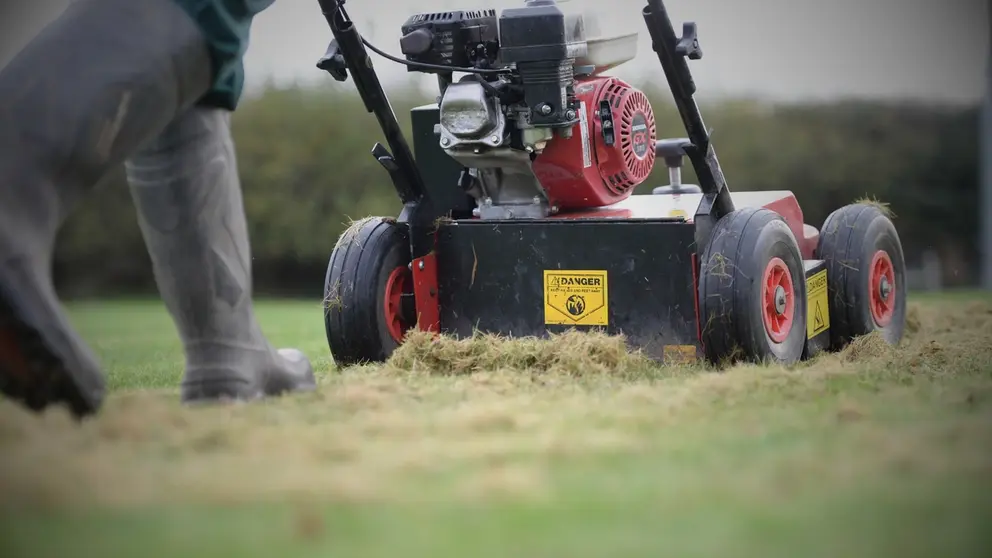
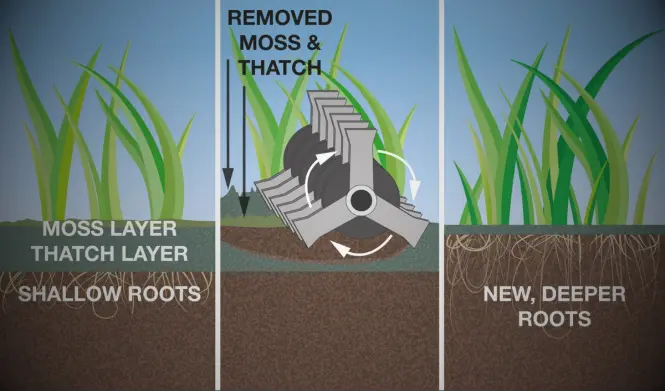
As grass grows, is mowed, and undergoes seasonal changes, a layer of thatch quickly develops above the soil line. This layer can hold moisture, protect the grass from drying out, and keep the soil cool, which is beneficial in moderation. However, when surface thatch becomes too thick, it prevents grass roots from penetrating the soil and creates ideal conditions for moss growth. This results in a spongy, mossy lawn.
How Do You Keep on Top of Surface Thatch in a Lawn?
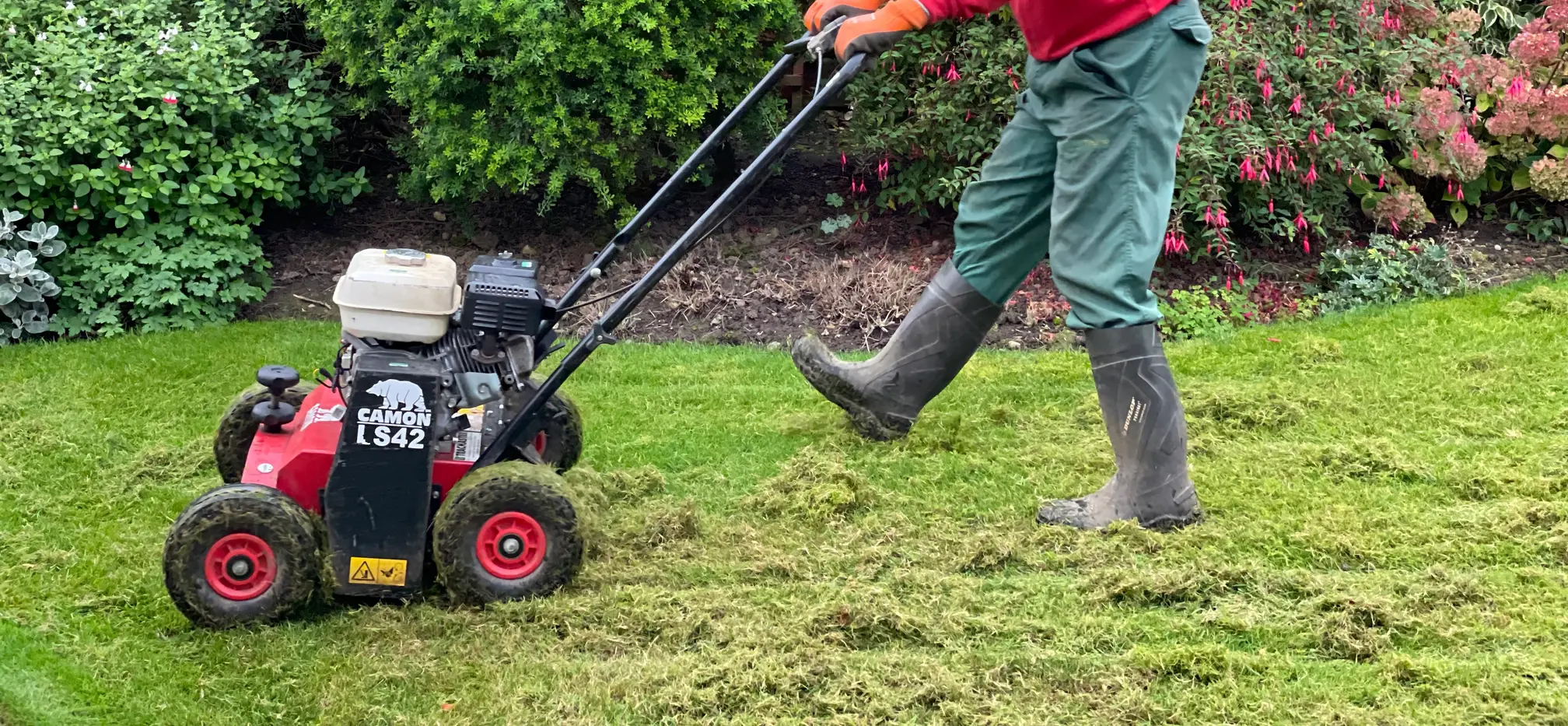
Regular maintenance, such as annual scarification or lawn thatch removal, is key to keeping surface thatch under control. Scarification involves removing excess thatch and debris from the lawn, improving air circulation, water retention, and nutrient absorption. This process helps your grass thrive by reducing thatch build-up and preventing moss from taking over.
What is Sub-Surface Thatch ?
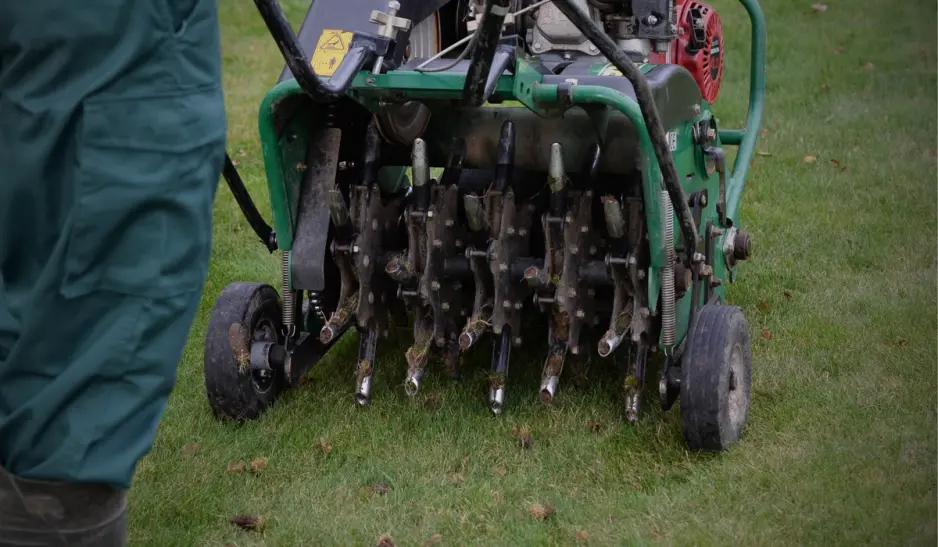
Sub-surface thatch is a layer of dead organic matter which forms a mat between where the soil line should be and the soil. Often the soil line becomes the top of the sub-surface thatch layer. This barrier makes for a very weak, prone to moss and disease lawn.
Lawns often have surface and sub-surface thatch at the same time. If a lawn has sub-surface thatch it will usually have surface thatch too.
You cannot just slice the thatch layer off the lawn, it has to be thinned out by removing vertical cores.
How do you thin out Sub-Surface Thatch?
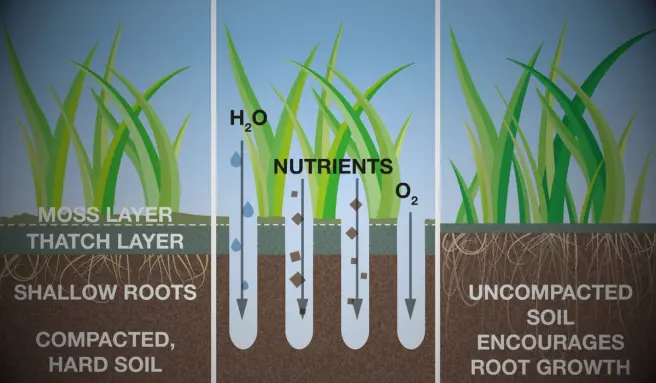
Regular Hollow-Tine Aeration is the most effective way to thin out sub-surface thatch. This process involves removing thousands of small plugs or cores from your lawn, allowing air, water, and nutrients to penetrate deeper into the soil. By breaking through the dense organic layer beneath the surface, Hollow-Tine Aeration helps relieve compaction, stimulate root growth, and improve the overall health and resilience of your lawn. It’s a vital part of long-term lawn care and especially important for lawns suffering from heavy thatch build-up below the surface.
Take Control of Thatch Today
Thatch can stop water and nutrients reaching the roots—scarification is the solution. It’s included, along with aeration, in our Standard Programme, or can be added to our Basic Programme
*Figures shown are approximate and based on available data. For illustrative purposes only.
Further Reading
Discover more about the treatments that work alongside scarification and aeration to keep your lawn strong and thriving.
Lawn Aeration
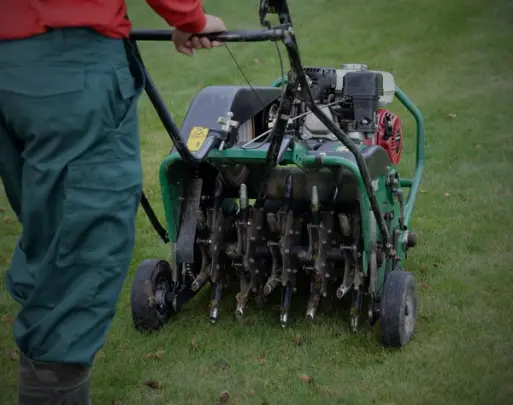
Lawn aeration improves root health by allowing air, water, and nutrients to reach deeper into the soil. It relieves compaction, boosts drainage, and reduces thatch—helping prevent moss and disease for a stronger, healthier lawn.
Read More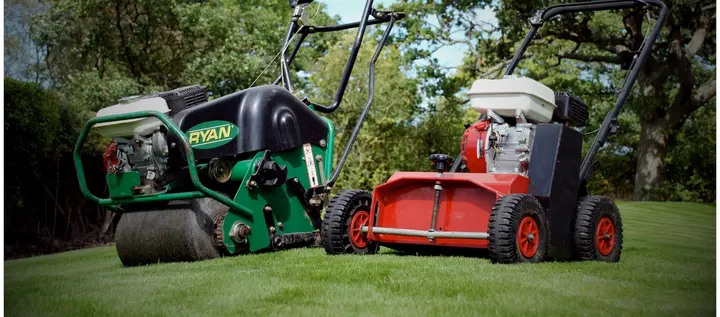
Want a thicker, healthier lawn?
Aeration and Scarification improve overall soil health by boosting airflow, nutrients, and water to grass roots. These essential treatments reduce compaction and thatch, promoting stronger, greener, and more resilient grass.
Read More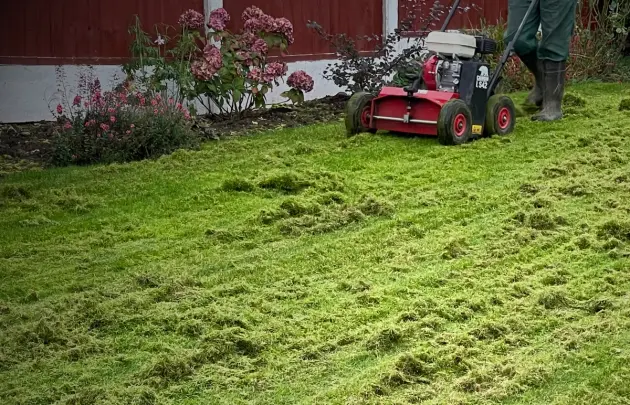
Lawn Scarification
Lawn Scarification is a mechanical process that reduces surface thatch, allowing essential elements like water, air, and fertilisers to reach the grass roots, promoting a healthier, more resilient lawn.
Read More